Lohy Bhir’d

Have you ever been drawn toward a place by curiosity, only to be told that you must never go there? As children, many of us encounter such places. So did I, in my hometown, Jhang.
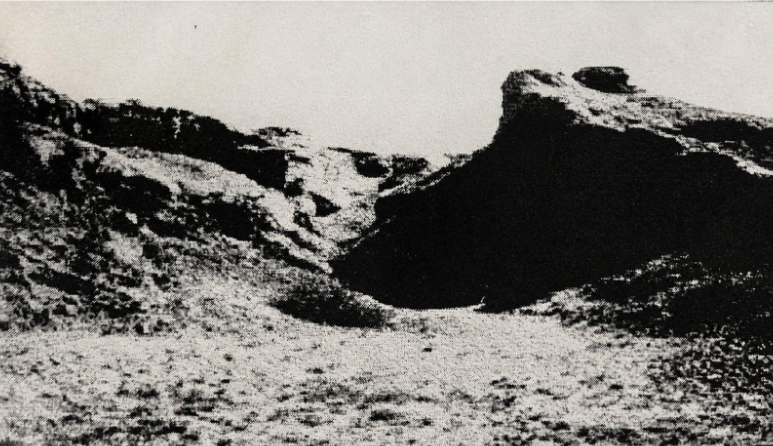
In the middle of the fields stood the remains of an ancient site known locally as Lohy Bhir’d. There was no fence, no guard, and little to indicate what the site had once been. All that remained was a vast mound scattered with fragments of pottery and traces of what appeared to have once been a substantial structure.
Yet people avoided the place, particularly after dusk. Local folklore held that the ruins were haunted by spirits and otherworldly beings. Children were forbidden from playing there because, according to popular belief, the site belonged to people who had incurred the wrath of Allah. No single story explained the place; instead, every family seemed to have its own version.
Some locals claimed to sense a strange or negative presence there. Others said they had seen figures moving among the ruins after dark. The most enduring story, however, concerned the openings in the ruined walls.
My grandmother told my mother that she had once seen people from another world through one of these openings. By the time the story reached me, it had evolved into a familiar childhood warning: if you looked through the holes in the ruins, you might see spirits or beautiful supernatural women with long hair, pale faces, deep-set eyes, and elaborate clothing.
According to the legend, making eye contact with these women was dangerous. Their beauty could draw a person into an illusion from which they would never escape. Stories such as these ensured that no one approached the ruins between dusk and dawn.
Over time, the site became increasingly neglected. The fortifications collapsed into a mound, and as the ruins disappeared from everyday life, they became a source of curiosity as much as fear. Locals began searching the remains for valuables, and stories circulated of people finding gold and silver coins, pottery, and even buried treasure.
Fear was not the only factor discouraging people from visiting such sites; social and religious taboos also played a role. It was often claimed that, within Islam, visiting ruins associated with past civilizations was prohibited and that such sites ought to be demolished.
However, the Qur’an explicitly encourages reflection upon the remains of past peoples as a means of observing history and contemplating divine judgment. This suggests that the prohibition is not grounded in the Qur’an itself, but rather in later interpretations and practices that discouraged engagement with the past.
For years, one question remained with me: What was actually there?
Today, Lohy Bhir’d no longer exists. The ruins have been dismantled, and fields of crops and seasonal vegetables cover the site. What survives are fragments of oral memory: stories passed from grandparents to parents, and from parents to children, gradually transforming history into folklore.
Historical and archival records, alongside local oral accounts, offer another possibility. They suggest that the site may have been associated with Sher Shah Suri, who passed through the region during his campaigns following the Battle of Kanauj in 1540. His extensive network of roadside sarais and military stations became an important part of the landscape of sixteenth-century northern India.
Local accounts identify Lohy Bhir’d as one such fortified station, with its name roughly understood as “Ruins of Iron.”
Whether every detail of this history can be established is another question. What matters is that, somewhere between the ruins and the stories, a historical site became a haunted one.


Comments